
- Home
-
Tours
Popular Desert SafariSpecial Desert Tours
- Stopover Tour
- Shore Excursions
- Visa
- Blog
- About
- Contact


Best Time to See the Milky Way in Abu Dhabi
What if your most unforgettable dinner had no walls, no noise, and only stars above?
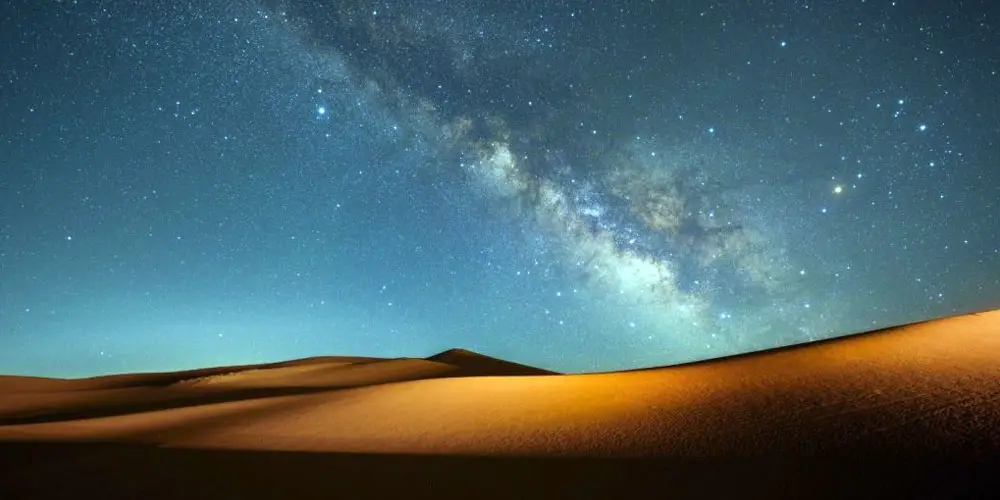
If you want to see the Milky Way in Abu Dhabi, choosing the right night matters. The season, moonlight, weather, and location can all affect what you see.
The Milky Way is generally visible in the UAE from late spring through early autumn, with the bright galactic core easiest to see during the summer months. July and August are particularly good months for viewing, while the viewing window becomes shorter toward autumn.
A dark desert location also makes a big difference. Al Quaa is one of the better-known places for Milky Way viewing in the UAE because it is far from major city lights.
01
When Is the Best Time to See the Milky Way in Abu Dhabi?
The best time depends on three main things:
- The Milky Way core must be above the horizon.
- The sky should have little or no moonlight.
- The weather should be clear with low haze and dust.
For the UAE, the main viewing season for the bright Milky Way core runs roughly from late March or April into September or October, depending on the exact location and time of night. The summer months usually provide the easiest viewing opportunities.
If you want a simple answer, May to August is a good period to plan a Milky Way trip, with July and August offering particularly good opportunities.
However, a good month does not guarantee a good view. You should also check the moon and weather before your trip.
02
What Is the Best Month to See the Milky Way in Abu Dhabi?
July and August are among the best months to see the bright Milky Way core in Abu Dhabi.
During this period, the core is well placed for viewing from the UAE. Local astronomy guidance also identifies July as a particularly good month for Milky Way viewing.
Here is a simple guide:
| If you want... | Choose |
|---|---|
| A more active ride | Horse riding |
| A traditional desert activity | Camel riding |
| A one-hour horse experience | Horse riding |
| A slower pace | Camel riding |
| Horse and rider photos | Horse riding |
| Traditional camel photos | Camel riding |
| Private 4x4 transportation | Desert horse-riding tour |
| A focus on horseback riding | Horse riding |
| A relaxed desert experience | Camel riding |
These are general guidelines. The actual viewing time changes throughout the year.
03
What Time of Night Is Best for Seeing the Milky Way?
The best time is not the same every night.
In the main Milky Way season, the core can become visible after the sky gets dark. Local guidance for Al Quaa places good viewing opportunities from around 9 PM into the early morning during the main season, although the exact window changes with the date.
For the best chance:
- Arrive before it gets completely dark.
- Give the sky time to become fully dark.
- Avoid bright lights.
- Check the Milky Way position for your chosen date.
- Stay long enough for your eyes to adjust.
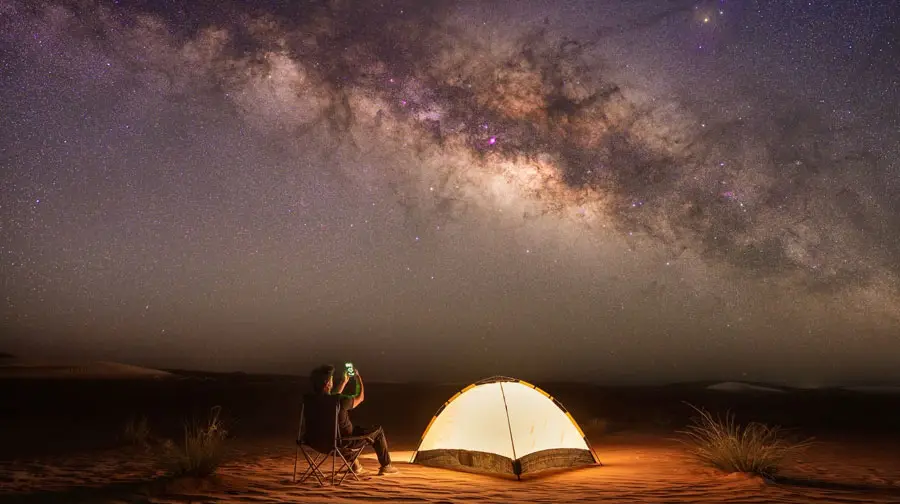
You do not need to wait until the middle of the night every time. During summer, the Milky Way core can be visible during the evening.
04
Does the Moon Affect Milky Way Visibility?
Yes. Moonlight can make the Milky Way much harder to see.
The Milky Way contains many faint stars. A bright Moon adds light to the sky and reduces the contrast between the stars and the background.
This is why many stargazers plan their trips around a new moon or a period when the Moon is below the horizon.
You do not always need a new moon. What matters is having a long enough period with little moonlight.
New Moon vs Full Moon
| Moon Phase | Milky Way Visibility |
|---|---|
| New Moon | Best conditions |
| Crescent Moon | Usually good |
| Half Moon | Some moonlight can affect visibility |
| Full Moon | Poor for faint Milky Way details |
If your main goal is to see the Milky Way, choose a night with little or no moonlight.
05
Why Is Al Quaa Good for Seeing the Milky Way?
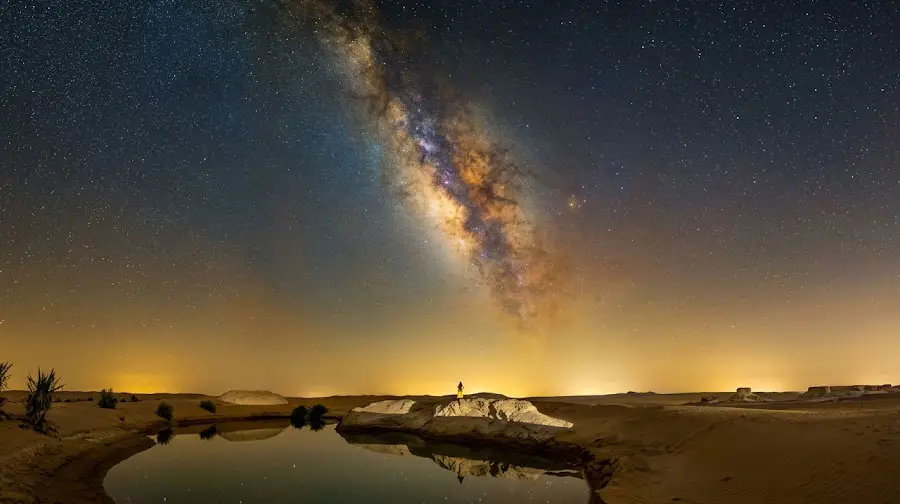
Al Quaa is one of the popular dark-sky locations in the UAE for Milky Way viewing.
It is located away from the bright city lights of Abu Dhabi and Dubai. This makes it easier to see faint stars and the Milky Way. Local astronomy guidance identifies Al Quaa as a strong location for viewing the galaxy's bright core.
The open desert also gives you a wide view of the sky.
At night, you can look toward the southern part of the sky to find the area around Sagittarius and Scorpius, which points toward the centre of the Milky Way.
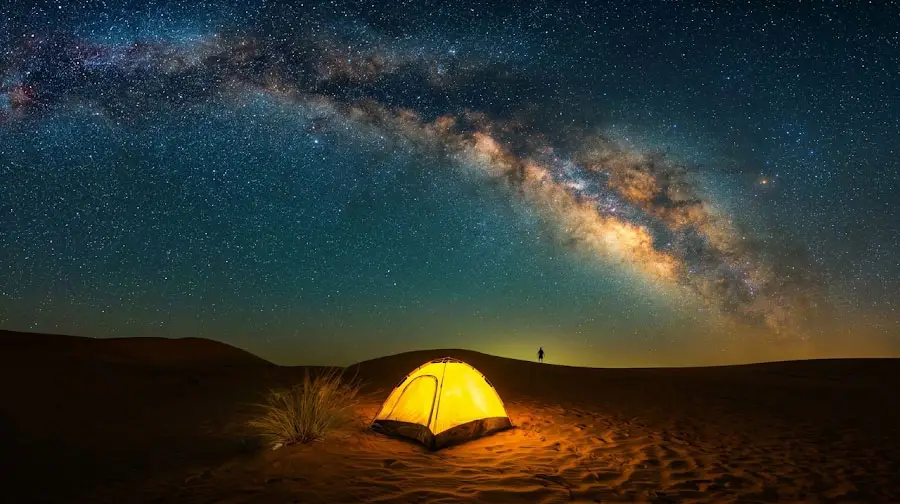
If you want to stay overnight, Al Quaa Desert Milky Way Stargazing Overnight Camping is an option that combines desert camping with time for stargazing.
06
What Conditions Are Best for Milky Way Stargazing?
Choosing the right month is only part of the planning.
For a better view, look for:
- Clear skies
- Little or no moonlight
- Low cloud cover
- Low haze
- Low dust
- Minimal artificial light
- An open view of the southern sky
A clear sky does not always mean perfect visibility. Dust and haze can reduce the contrast of the Milky Way even when there are no clouds.
This is why it is useful to check the weather and sky conditions shortly before leaving.
07
Can You See the Milky Way With the Naked Eye?
Yes. You do not need a telescope to see the Milky Way.
From a dark location, you may notice a faint, cloudy band stretching across the sky.
Your eyes need some time to adjust to the darkness. Bright phone screens and car lights can make this harder.
The Milky Way may also look less dramatic to your eyes than it does in photographs. Long-exposure cameras can capture much more colour and detail than the human eye can see.
So do not expect the sky to look exactly like a heavily edited Milky Way photograph.
08
Best Time to Visit Al Quaa for Milky Way Stargazing
If your main goal is Milky Way viewing, consider these four things together:
| What to Check | What Is Better? |
|---|---|
| Season | May to August |
| Moon | New moon or little moonlight |
| Weather | Clear, low-haze conditions |
| Location | Away from city lights |
| Time | After the sky becomes fully dark |
There is no single date that guarantees a perfect view.
A better approach is to choose a good season, then check the moon phase and weather for your exact date.
09
What Should You Bring for Milky Way Stargazing?
You do not need a lot of equipment for basic stargazing.
Bring:
- Drinking water
- Comfortable clothes
- A light jacket
- Closed shoes
- Phone
- Power bank
- Camera, if you want to take photos
- Tripod for night photography
- Small flashlight
- A chair or mat if you are going independently
If you are visiting the desert, closed shoes are a good choice. Local guidance for Al Quaa also recommends carrying essentials such as water, snacks, warm clothing, and suitable lighting.
10
Tips for Better Milky Way Viewing
A few simple steps can make your night much better.
Stay Away From Bright Lights
Move away from direct car lights, buildings, and other bright sources.
Give Your Eyes Time to Adjust
Do not expect to see the Milky Way immediately after getting out of the car. Give your eyes time to become comfortable in the dark.
Keep Your Phone Dim
A bright phone screen can affect your night vision. Use the lowest comfortable brightness.
Check the Moon Before You Go
A bright Moon can hide many faint stars. Check the moon phase and moonrise time for your chosen date.
Check the Weather
Clouds, dust, and haze can reduce visibility. Check the forecast before leaving.
Look Toward the Southern Sky
During the main viewing season, the bright Milky Way core is generally found toward the southern part of the sky from the UAE. Sagittarius can help you find the direction.
Stay for a While
Do not leave as soon as you arrive. The sky changes throughout the night, and the Milky Way can become easier to see as darkness increases.
11
Milky Way Stargazing vs Regular Desert Safari
Not every desert tour is designed for stargazing.
| Milky Way Stargazing | Regular Desert Safari |
|---|---|
| Focuses on the night sky | Focuses on desert activities |
| Best around darker nights | Usually focused on afternoon or evening |
| Stargazing | Dune bashing |
| Night photography | Camel riding |
| Overnight camping options | Desert camp activities |
| Quiet time in the desert | Dinner and entertainment on selected tours |
Choose a Milky Way camping trip if you mainly want to enjoy the desert at night and spend more time looking at the sky.
A regular desert safari may be better if your main goal is dune bashing, camel riding, sandboarding, and camp activities.
12
Is Al Quaa Good for Overnight Camping?
Yes, Al Quaa can be a good choice if you want to combine desert camping with stargazing.
Staying overnight gives you more time in the desert instead of leaving after a short evening visit.
Desert Dreams' Al Quaa Desert Milky Way Stargazing Overnight Camping package includes private tent accommodation, camping equipment, beverages, a 4x4 vehicle, and an adventure leader. The listed rate is AED 450 per person, with a minimum group size of four people.
If you are interested in an overnight desert trip with a wider range of activities, you can also look at the Overnight Desert Safari Abu Dhabi.
13
Plan Your Milky Way Stargazing Trip
Seeing the Milky Way does not require complicated equipment. The most important things are a dark location, little moonlight, clear skies, and the right time of year.
If you want to spend a full night away from city lights, Al Quaa is a practical option for combining desert camping with stargazing.
Planning a night under the stars in the Abu Dhabi desert? Share your preferred date, number of guests, and pickup location with our team to check availability and arrange your Al Quaa Milky Way camping trip.
AED 450 per person | Minimum 4 guests
Call or WhatsApp Desert Dreams to plan your trip.
Frequently Asked Questions
The main viewing season for the bright Milky Way core is roughly from late spring through early autumn. May to August is a good period to plan a trip, with July and August offering particularly good opportunities.
July and August are among the best months for viewing the bright Milky Way core from the UAE.
Yes. The Milky Way can be seen from dark locations in the Abu Dhabi desert when the sky conditions are suitable.
Yes. Al Quaa is known as a dark desert location and is popular for Milky Way viewing in the UAE.
Yes. Bright moonlight can make the Milky Way and faint stars harder to see.
Usually, yes. A new moon can provide darker skies because there is little or no moonlight.
Go after the sky becomes fully dark. The exact viewing window depends on the date, location, moonlight, and the Milky Way's position.
No. You can see the Milky Way with the naked eye from a sufficiently dark location.
You can see parts of the Milky Way in winter, but the bright galactic core isn't a good evening target in the UAE.
Bring water, comfortable clothes, closed shoes, a light jacket, a phone, and a power bank. A camera and tripod are useful if you want to take night photographs.
Yes, some modern phones have night or astrophotography modes. A tripod can help keep the phone steady. A dedicated camera can capture more detail.
